What Is Deep Learning In AI?
Deep learning is one of the driving forces behind modern AI, enabling machines to recognize patterns, understand language, and make smarter decisions.

Introduction To Deep Learning
If you’ve ever wondered how your phone recognizes your voice, how cars detect pedestrians, or how a chatbot understands your questions, you’ve already brushed against deep learning—whether you knew it or not. Deep learning is one of those technologies that quietly works behind the scenes, powering apps and tools that feel almost magical. But behind that “magic” is a very real system built on math, data, and neural networks designed to mimic how humans learn.
➡️ How Deep Learning Fits Within Artificial Intelligence
Artificial intelligence is the broader umbrella. Under it sits machine learning—algorithms that learn from data. And deep learning is a more advanced, layered version of machine learning. If AI is the brain, deep learning is the part that handles the heavy thinking. It digs into huge amounts of information, finds patterns we’d miss, and improves every time it’s exposed to new data.
➡️ The Rise Of Neural Networks in Modern Technology
Neural networks aren’t new. Researchers experimented with them decades ago. But computers back then weren’t powerful enough to train large models. Today, with stronger hardware and oceans of data, neural networks have stepped into the spotlight. Their rise reshaped industries—healthcare, entertainment, transportation, and retail. Suddenly, tasks that seemed impossible became routine.
How Deep Learning Works
Deep learning works a bit like trial and error. The model makes a prediction, checks how wrong it was, adjusts itself, and tries again. With enough repetition, it starts getting very, very good.
➡️ The Structure Of Neural Networks
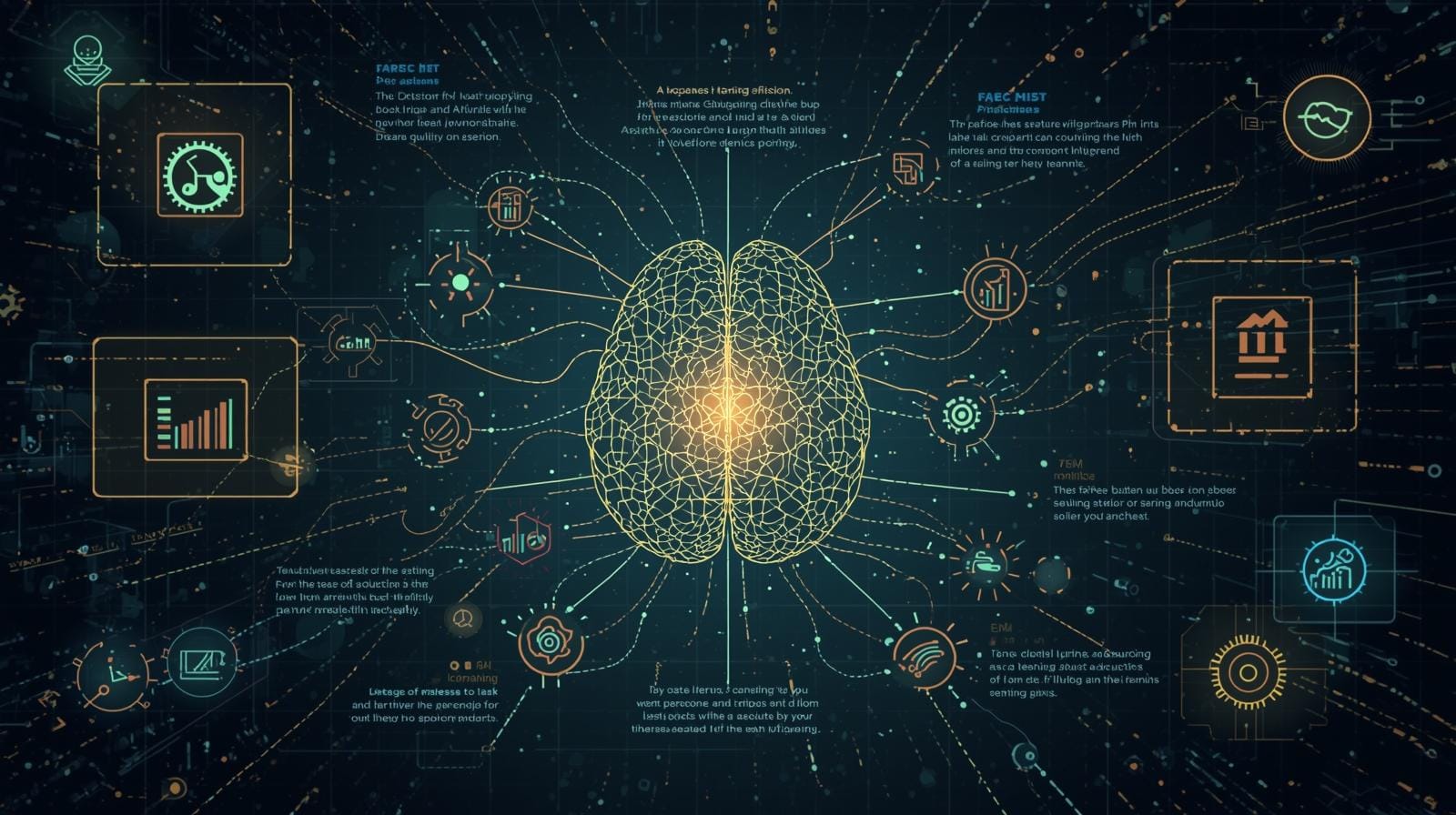
Think of a neural network as a web of tiny decision-makers—called neurons—spread across multiple layers. The first layer takes raw information. The last layer gives a final answer. Everything in between transforms the data step by step, like a series of translators refining meaning.
➡️ Layers, Nodes, and Weights Explained
Each node (or neuron) receives input, multiplies it by a weight, adds a bias, and sends the result through a function. If that sounds technical, here’s a simpler picture:
It’s like a group of people trying to guess someone’s age. Each person has a slightly different opinion (weight). They share their guesses, adjust based on feedback, and eventually reach a surprisingly accurate estimate.
➡️ Training Models Through Data and Iteration
Training is where the magic happens. The model studies thousands—even millions—of examples. It makes mistakes, corrects itself, and keeps refining. This repetitive loop is what allows deep learning systems to reach near human-level performance in tasks like image analysis or speech recognition.
Key Components Of Deep Learning
➡️ Activation Functions and Their Role
Activation functions decide whether a neuron should “fire” or stay quiet. They introduce non-linearity, allowing the network to understand complex relationships. Without these functions, deep learning would be limited to very basic tasks.
➡️ Backpropagation and Gradient Descent
These two concepts explain how a model learns. Backpropagation sends errors backward through the network, helping each layer understand how much it contributed to a mistake. Gradient descent adjusts weights based on those errors—small steps toward better predictions.
➡️ Importance Of Large Datasets
Deep learning thrives on data the way humans thrive on oxygen. The more examples it sees, the more accurate it becomes. This is why tech companies with massive datasets lead much of deep learning innovation.
Types Of Deep Learning Models
➡️ Convolutional Neural Networks (CNNs)
CNNs excel at images. They power facial recognition, medical image analysis, and even apps that identify plants or animals. Their ability to detect edges, textures, and shapes makes them incredibly powerful.
➡️ Recurrent Neural Networks (RNNs)
RNNs handle sequences—sentences, time-series, audio. They remember what came before, making them ideal for tasks like translation or stock prediction.
➡️ Transformers and Attention-Based Models
Transformers changed everything. They can process huge contexts, understand long sentences, and perform tasks with astonishing accuracy. Most modern language models rely on this architecture.
➡️ Generative Models (GANs and VAEs)
Generative models create new content—images, voices, videos. GANs pit two networks against each other: one generates, the other critiques. VAEs learn compressed representations and create variations. Together, they fuel deepfake technology, artwork generators, and synthetic media.
Real-World Applications Of Deep Learning
➡️ Image and Video Recognition
From unlocking your phone with your face to scanning security footage, deep learning sees the world through patterns. It recognizes objects, detects movement, and can even describe what’s happening.
➡️ Natural Language Processing (NLP)
Deep learning helps machines read, write, summarize, translate, and answer questions. It’s the backbone of chatbots, digital assistants, and content recommendation engines.
➡️ Autonomous Vehicles and Robotics
Self-driving cars depend heavily on deep learning. Models detect road signs, pedestrians, lane markings, and unpredictable obstacles. Robotics uses similar systems to navigate, grasp objects, and adapt to new environments.
➡️ Healthcare Diagnostics and Predictions
Deep learning reads X-rays, identifies tumors, predicts patient risks, and supports doctors with evidence-based insights. In some cases, it spots abnormalities faster than human experts.
Benefits Of Deep Learning
➡️ Superior Accuracy Over Traditional Models
Given enough data, deep learning can outperform classic machine learning techniques by a wide margin. Its predictions become more precise with additional training.
➡️ Ability To Learn Complex Patterns
Simple models struggle with complexity. Deep learning thrives on it. From identifying fraud to predicting supply chain disruptions, it uncovers patterns humans rarely see.
➡️ Automation Of Feature Engineering
Traditional machine learning requires manual feature selection. Deep learning learns features automatically, saving time and reducing human bias.
Challenges and Limitations
➡️ High Computational Requirements
Deep learning models require powerful GPUs or cloud resources. Not every business can afford the hardware investment.
➡️ Need for Large, High-Quality Data
Poor data leads to poor results. Deep learning models are only as good as the information they learn from.
➡️ Lack of Transparency (“Black Box” Problem)
Deep learning models are often difficult to interpret. They know the right answer but can’t always explain the reasoning. This creates challenges in sensitive fields like healthcare and finance.
The Future Of Deep Learning
➡️ Advancements In Model Efficiency
Researchers are developing smaller, faster models that work on mobile devices. This means deep learning will soon be everywhere—even on devices without strong hardware.
➡️ Ethical and Responsible AI Development
As deep learning grows, so does the need for fairness, transparency, and accountability. Future systems will focus on safer, more responsible outcomes.
➡️ Deep Learning’s Expanding Role Across Industries
From agriculture education, deep learning will continue shaping industries. Its versatility makes it one of the most powerful tools in modern technology.
FAQs
Is Deep Learning The Same As Machine Learning?
Deep learning is a subset of machine learning that uses neural networks to learn from large datasets.
Why Is Deep Learning So Powerful?
It learns complex patterns automatically and improves with more data.
Do I Need a Lot Of Data To Use Deep Learning?
Yes, deep learning performs best with large, diverse datasets.
What Industries Use Deep Learning The Most?
Healthcare, finance, retail, automotive, entertainment, and cybersecurity.
Can Deep Learning Models Explain Their Decisions?
Not easily. Their complexity makes them challenging to interpret, which is why explainable AI is an active research area.