
Technology News Today: Big Updates In Robotics & Automation
Robotics and automation advancements are reshaping industries, introducing smarter machines, and accelerating innovation.
Robotics and automation are moving faster than ever, and today’s breakthroughs are shaping how we work, build, and live. From smarter robots that can learn tasks on their own to automated systems transforming industries, the technology landscape is evolving almost daily. These changes aren’t just happening in big factories—they’re influencing healthcare, homes, transport, and even small businesses.
In this update, we break down the latest developments in robotics and automation in a clear, easy-to-understand way. Whether you’re a tech enthusiast, a business owner, or simply curious about the future, this overview will help you stay informed and see what’s coming next in the world of intelligent machines.
Major Breakthroughs In Robotics This Week
✅ Advances In Human-Robot Interaction and Adaptive Behaviors
Engineers have been working on making robots more intuitive around people, and this week’s updates show huge progress. Robots now adjust their pace, maintain personal space, and interpret gestures in real time. A few research groups even demonstrated robots that can predict what a human might do next — for example, reaching for a tool or stepping backward — and react safely.
These small improvements may not sound glamorous, but they’re the foundation of robots working comfortably alongside humans.
✅ New Milestones In Humanoid and Industrial Robot Capabilities
Humanoid robots have been making headlines again. One team unveiled smoother, more human-like gait patterns, while another showcased enhanced balance on uneven ground. On the industrial side, robotic arms are becoming absurdly precise, capable of handling fragile objects with a gentle touch that would’ve been impossible a few years ago.
It feels like robotics is finally crossing that invisible line separating “machine” from “collaborative partner”.
✅ Cutting-Edge Research From Leading Robotics Laboratories
Several labs published research on “self-calibrating” robots—machines that fix their own internal errors without human intervention. Another standout project involved robots that can build simple structures using only basic instructions, a stepping stone for future construction automation.
Reading through these papers, you get the sense that robotics is entering a new phase: systems learning, correcting, and adapting autonomously.
Automation Technologies Reshaping Industries
✅ AI-Enhanced Automation Tools Entering Mainstream Workflows
One of the biggest trends this week is automation slipping seamlessly into everyday office life. AI-powered workflow tools now automate scheduling, customer responses, document sorting, and even financial forecasting. These aren’t massive enterprise systems—they’re tools small teams and freelancers can use immediately.
✅ New Industrial Automation Systems For Manufacturing & Logistics
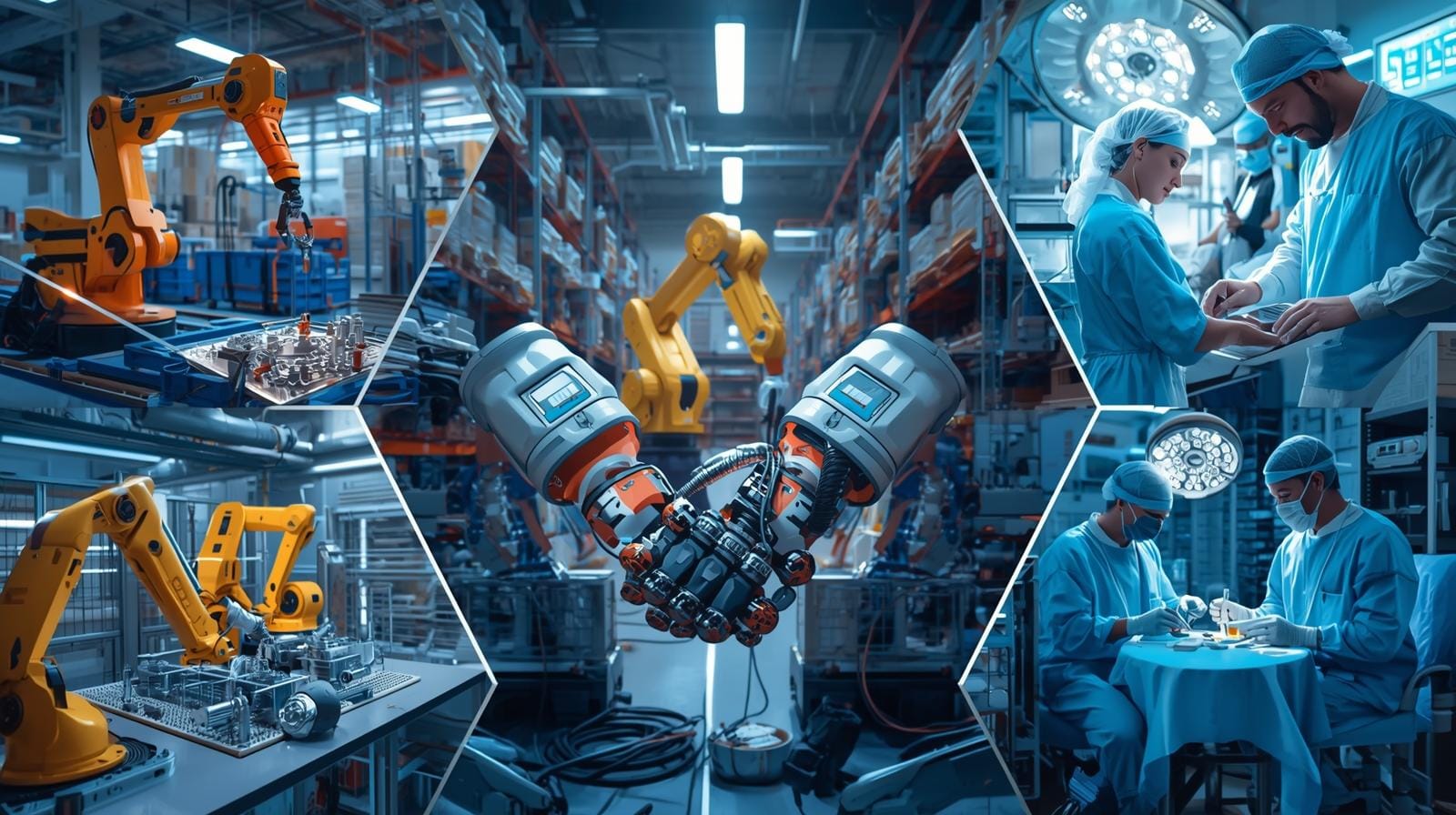
Manufacturing facilities are reporting faster throughput thanks to upgraded automation lines. Robots now coordinate with sensors and AI-powered planners to reduce downtime. Logistics companies, meanwhile, are deploying robots that can sort thousands of parcels an hour without human supervision.
The result is a quiet but significant shift: industries are starting to operate around the clock without burning out their human workforce.
✅ Smart Infrastructure and Autonomous Facility Management
Several smart-building platforms launched updates this week. Think cleaning robots, automated lighting and climate systems, and AI-managed energy distribution. These upgrades not only reduce labor but also cut costs—something businesses appreciate in today’s economic climate.
Robotics In The Real World: Key Deployments
✅ Robots Improving Healthcare, Elder Care, and Rehabilitation
Healthcare remains one of the most inspiring robotics stories. This week, hospitals rolled out robotic assistants that help move equipment, deliver supplies, and support basic patient tasks. In elder care, companion robots are getting smoother at conversation and emotional cues, offering comfort to individuals living alone.
Rehabilitation centres are also integrating robotic exoskeletons that help patients regain mobility with greater confidence.
✅ Delivery, Warehouse, and Service Robots Expanding Their Presence
If you’ve noticed more robot deliveries in your neighbourhood, you’re not imagining it. Delivery bots expanded to more cities this week, navigating sidewalks with growing confidence. Warehouses reported increased use of autonomous forklifts and inventory drones—a major step toward fully automated inventory cycles.
Restaurants and retail stores are also experimenting with service robots, especially in high-traffic areas.
✅ Public Sector and Government Adoption Of Robotics
Municipalities have started embracing robots for maintenance, surveying, and safety. A few local governments announced trials of robots for road inspections, emergency responses, and urban planning analysis.
It’s becoming clear that robotics isn’t just shaping businesses—it’s quietly reshaping public infrastructure too.
Business, Investment, and Market Movement
✅ Funding Rounds and Startup Highlights In Robotics
Investors had a busy week. Robotics startups developing warehouse bots, agritech machines, and surgical automation tools raised significant funding. One startup working on autonomous fruit-picking bots caught plenty of attention — a sign that robotics in agriculture is gaining traction.
✅ Corporate Partnerships Driving Automation Expansion
Several major companies announced partnerships aimed at integrating robotics into retail, logistics, and customer support. The big trend? Hybrid teams of humans and robots, not robots replacing humans.
This collaborative model seems to be the direction most industries are leaning toward.
✅ Market Reports Signaling Growth In Robotics Demand
Market analysts released fresh data indicating double-digit growth in robotics demand across Asia, Europe, and North America. As labour shortages continue in many sectors, businesses are turning to automation to fill operational gaps — not to reduce human jobs, but keep things running smoothly.
Emerging Technologies Powering Robotics & Automation
✅ Breakthrough Sensors, Chips, and Embedded Systems
Sensor accuracy is improving at an impressive speed. Robots can now detect touch, proximity, motion, temperature, and even subtle sound patterns with greater precision. New chips designed specifically for robotic workloads promise faster processing without draining power.
✅ Next-Gen Software, Simulation, and Robot Operating Platforms
This week also brought big upgrades in simulation environments. Engineers can now test robots in ultra-realistic virtual worlds before ever touching real hardware, cutting development costs dramatically.
Next-gen operating platforms are also emerging, creating standardised robotics “ecosystems” that manufacturers around the world can adopt.
✅ Advances In Battery Life, Energy Systems, and Mobility
Battery technology saw a strong update as well, with new prototypes offering longer runtimes and faster charging. Robots are becoming more mobile, more flexible, and more capable of operating in environments that once limited their usefulness.
Ethical, Social, and Workforce Considerations
✅ Debates On Job Displacement and Workforce Transformation
Every time a robotics update drops, the job-loss debate resurfaces. This week, discussions leaned toward a more balanced view: automation will change jobs, not erase them. Workers are shifting from repetitive tasks to supervisory and collaborative roles.
It's less a threat and more a transformation.
✅ Ethical Questions Around Autonomous Decision-Making
As robots become more independent, ethical debates continue: Should a robot make a safety decision on its own? How do we guarantee fairness in automated systems? These questions are shaping new standards and guidelines across the industry.
✅ Policy Discussions Shaping The Future Of Robotics
Several governments have begun drafting policies to regulate autonomous machines, covering safety, liability, and transparency. The goal is clear — innovation shouldn’t outpace responsibility.
What’s Coming Next In Robotics and Automation
✅ Technologies Expected To Break Through In The Next 12 Months
Expect major advancements in:
- home-use service robots
- autonomous micro-transport vehicles
- self-learning industrial systems
- AI-powered construction robots
2024–2025 laid the groundwork. 2026 and beyond will scale it.
✅ Predictions From Industry Experts and Analysts
Analysts agree that robotics adoption will accelerate, especially in logistics, healthcare, manufacturing, and hospitality. Smaller companies will also join in thanks to cheaper hardware and easily deployable systems.
✅ The Future Role Of Robotics In Everyday Life
From household assistants to urban delivery networks, robots will slowly blend into daily routines. Not as replacements for people—but as helpers that give us more time back.
FAQs
Is Robotics Replacing Human Jobs?
Not entirely. It’s shifting people into safer, more strategic, and more creative roles.
Which Industries Are Adopting Robotics The Fastest?
Manufacturing, logistics, healthcare, and retail are leading the charge.
Are Service Robots Becoming More Reliable?
Yes—recent upgrades in sensors and AI make them significantly more accurate and safe.
Do Small Businesses Use Robots Too?
Absolutely. Affordable robots and automation tools are now available for SMEs.
What’s The Biggest Breakthrough In Robotics This Week?
Adaptive human-robot interaction systems—robots getting better at reading and responding to human behavior.