Inside Google AI: How Gemini and DeepMind Are Transforming the Future
Google’s Gemini and DeepMind projects are pushing AI into a new era, bringing smarter tools, bold innovations, and advanced capabilities that are reshaping how we work, create, and experience technology.
A few years ago, I visited a research lab where a young engineer told me something interesting. He said that the most powerful part of AI wasn’t the code—it was the culture inside the team building it. At the time, I didn’t fully understand what he meant. Today, after watching Google’s AI journey unfold—starting from DeepMind’s early breakthroughs to the arrival of Gemini—it finally makes sense.
Google didn’t just set out to build clever algorithms. It built an ecosystem: a research engine, a product layer, and a scientific ambition that lives somewhere between curiosity and practicality. The result is a wave of AI technology that’s reshaping how tools work, how people learn, and how businesses operate.
Let’s go behind the scenes and explore what makes Gemini and DeepMind such catalysts for the future.
The Evolution Of Google AI and Its Vision For The Future
➡️ How DeepMind Set The Foundation For Breakthrough AI
DeepMind’s story started long before most of the world cared about neural networks. The team obsessed over one big idea: can machines learn the way nature learns? That obsession gave us moments that changed history:
- AlphaGo learning strategic moves nobody expected
- AlphaFold predicts protein structures that accelerate science
- Reinforcement learning that solves problems through experimentation
DeepMind didn’t just chase scale—it chased behaviour. In a way, it taught the industry that AI could discover things humans couldn’t even imagine.
➡️ The Emergence Of Gemini as Google’s Next-Gen AI Model
Then came Gemini—Google’s answer to the growing demand for a unified model that could do more than chat. Instead of training separate systems for text, images, code, and logic, Gemini blends these capabilities into one architecture.
If DeepMind was the spark, Gemini is the engine that carries that spark into real products. It’s multimodal, context-aware, and much closer to the long-term vision of AI that behaves like a general problem solver—not a narrow tool.
➡️ Why Google Is Betting Big On Multimodal Intelligence
For the last decade, AI has mostly worked in silos. One model wrote text. One classified image. Another translated language. But the real world isn’t siloed. When you ask a question like “Is this bike safe to ride?”, you’re asking for:
- image analysis
- mechanical reasoning
- safety context
- a clear explanation
Gemini is Google’s attempt to combine senses—to let AI understand the world more like a person does.
What Makes Gemini Different From Previous AI Models
➡️ Unified Multimodal Architecture Explained Simply
If you strip away the buzzwords, Gemini is built around a simple idea: one brain, many skills. Instead of stitching models together after training, everything is built from the beginning to share knowledge. That means:
- better memory
- smoother reasoning
- fewer contradictions
- richer answers
In practical terms, a Gemini-powered tool can look at a chart, read a paragraph, and explain both in a single response without hopping between systems.
➡️ Performance Gains In Reasoning, Coding, and Creativity
The jump in quality doesn’t only show up in benchmarks. It shows up in how it thinks:
- It explains steps instead of giving final answers.
- It debugs code by detecting intent, not just syntax.
- It writes in styles that feel personal rather than generic.
It’s not perfect, but the difference is noticeable when you watch it reason through complex choices.
➡️ Real-World Use Cases Across Google’s Ecosystem
Gemini doesn’t live in a lab. It’s already slipping quietly into tools millions use:
- Search that synthesises quick answers
- Workspace documents with contextual logic
- Android assistants that understand images and speech together
- Cloud workloads that help developers build smarter apps
The integration is subtle by design. Google wants AI to assist, not overwhelm.
DeepMind’s Research Driving The Brain Behind AI
➡️ Reinforcement Learning and Emergent Problem-Solving
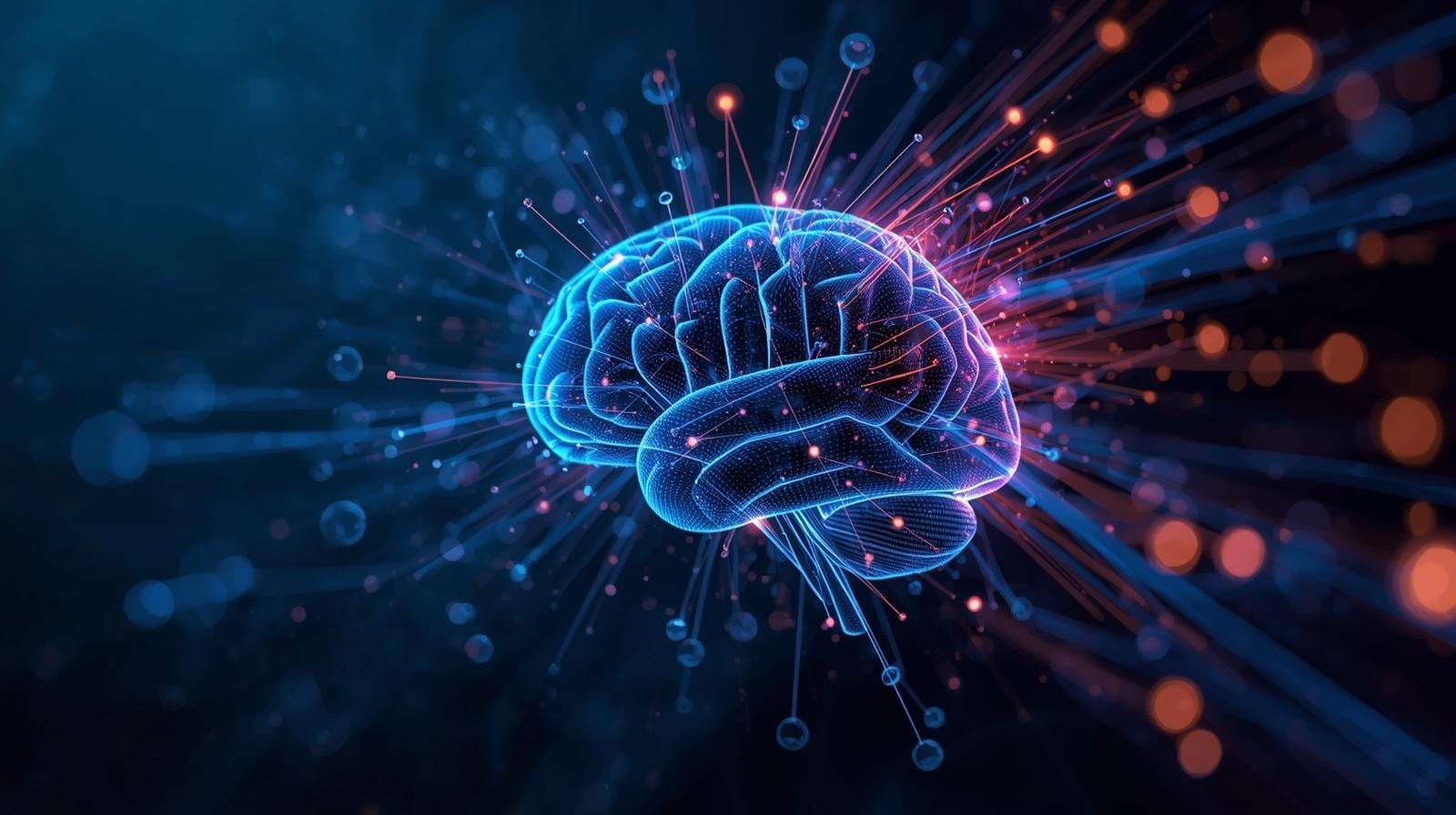
DeepMind’s speciality is teaching machines to learn through trial, error, and reward—just like kids learn to walk. This method creates behaviours no one explicitly programmed. That emergent ability is why DeepMind’s research keeps showing up in Gemini’s strengths: pattern discovery, creativity, and strategic thinking.
➡️ Scientific Breakthroughs: From Protein Folding to Robotics
Some of the most exciting things aren’t even software. AlphaFold gave scientists a shortcut through biology, turning slow lab work into fast computation.
In robotics, DeepMind treats robots as students. A robot might watch its own failure hundreds of times in simulation and suddenly become good at the task in the real world.
➡️ DeepMind’s Role In Responsible and Safe AI Design
DeepMind also pushes hard on AI safety—not as a marketing pitch, but as technical research. It studies:
- Bias in reward systems
- model hallucinations
- safe reinforcement signals
- transparency around reasoning
This work doesn’t get flashy headlines, but it makes the entire field safer.
Gemini’s Integration Into Everyday Google Products
➡️ Smarter Search Experiences With AI-Generated Results
People noticed something new in search results recently. Instead of ten blue links, they get summaries that combine multiple sources, then deeper context if they want it. Its search is evolving from “find” to “understand”.
➡️ Workspace Tools Powered By Generative Assistance
Google Docs can outline writing, summarise meetings, extract decisions from messy notes, and suggest action steps. Gemini turns collaboration into something more fluid, almost like having an intern with perfect memory.
➡️ Gemini in Android, Cloud Services, and Edge Devices
Android is becoming an intelligent layer, not just an OS. Snap a photo of a recipe and ask: “What can I cook with only half of these ingredients?”
The answer comes from image + reasoning + language, not a browser link.
Real-World Impact Across Industries
➡️ Healthcare Innovation Through AI-Driven Diagnostics
Doctors won’t be replaced, but they’re getting extraordinary tools. Imaging models detect patterns that the human eye struggles with. Research gets faster because hypotheses can be tested in silico before clinical trials.
➡️ Faster Scientific Discovery and Drug Development
AlphaFold proved that discovery can move in leaps instead of steps. Scientists can now simulate combinations and narrow the field in months rather than years.
➡️ Business Automation and Decision Support Systems
Companies are using Gemini-based tools to forecast demand, automate documentation, analyse data, and guide decisions. It’s the difference between guessing and operating with clarity.
Ethical Considerations and Responsible AI Development
➡️ Transparency, Guardrails, and AI Governance
AI that impacts billions needs structure. Google and DeepMind are trying to build frameworks for responsible use: how decisions are made, why answers were generated, and where the boundaries sit.
➡️ Reducing Bias In Large-Scale AI Systems
Bias isn’t just a technical issue—it’s a social one. DeepMind researches dataset fairness, user testing across cultures, and model behaviour under pressure.
➡️ Global Collaborations Shaping AI Safety Standards
AI is international. Google works with universities, regulators, and standards groups to prevent a “race to the bottom”. The goal is progress with caution, not chaos.
The Competitive Landscape Of Advanced AI
➡️ How Gemini Compares With Other Leading Models
Gemini competes with other cutting-edge systems, each with its own focus. Some prioritise openness, others speed, others reasoning depth. Gemini’s edge is multimodality plus product integration—usefulness at scale.
➡️ Google’s Strategy In The AI Race Against Big Tech
While some companies depend on partnerships to deploy AI, Google already owns the infrastructure: cloud, devices, OS, search, and research teams. That creates a full feedback loop.
➡️ Open Research vs Product-Driven Innovation
The tension inside Google is familiar: publish open science or build proprietary tools. Gemini tries to bridge both worlds: scientific inspiration and consumer value.
What’s Next For Gemini and DeepMind
➡️ The Push Toward General-Purpose and AGI-Like Systems
Google isn’t shy about its ambitions. The long-term goal is a system that can reason across domains, not just answer questions. That’s the first step toward something like AGI, though the term is debated.
➡️ Agent-Based AI and Autonomous Problem Solving
The next wave isn’t chat—it’s agents. Systems that act, test ideas, analyse results, and loop until they find answers.
➡️ Predictions For The Next Five Years Of Google AI
Expect:
- smarter personal assistants
- Scientific breakthroughs led by simulation
- AI-driven education tools
- business decisions powered by data-native insights
The future won’t arrive all at once. It will show up quietly—one update at a time—much like it already has.
FAQs
Is Gemini Just Another Chatbot?
No. It’s a multimodal model that powers many tools, not just a chat interface.
How Is DeepMind Involved Today?
DeepMind drives research, safety, and scientific breakthroughs that flow into Gemini.
Does Gemini Replace The Google Assistant?
It expands what assistance means—context-aware help across apps and screens.
Is Google Aiming For AGI?
Google is exploring general-purpose intelligence, but with a strong emphasis on safety and research.
How Will Gemini Affect Everyday Users?
Most people won’t notice the model—they’ll just experience tools that feel smarter, faster, and more helpful.