How Deep Learning Is Powering The Next Wave Of AI Innovation
Deep learning is accelerating the next wave of AI innovation by enabling smarter models, real-time decision-making, and powerful automation that reshapes industries, enhances user experiences.
If you’ve ever watched a machine accomplish something that feels almost human—spot a tumour in an MRI, write a paragraph with uncanny accuracy, or predict what you want to buy before you know it yourself—there’s a good chance deep learning was working behind the scenes.
The truth is, deep learning has quietly become the engine humming beneath the biggest breakthroughs in AI. And what’s fascinating is how fast it’s accelerating, reshaping entire industries while rewriting the rules of innovation. Let’s explore how it works, what’s driving its evolution, and why it’s becoming the heartbeat of AI’s next era.
What Is Deep Learning and Why It Matters Today
When people talk about “advanced AI”, they’re usually describing systems built on deep learning. At its core, deep learning is a method that teaches machines to learn patterns the same way our brains do—by observing vast amounts of data and gradually improving through layers of connected “neurones”.
➡️ How Deep Learning Differs From Traditional Machine Learning
Traditional machine learning needs clear instructions and handcrafted features. It's like giving a student step-by-step notes for an exam.
Deep learning, however, learns directly from raw data. No step-by-step notes. No micromanaging. Give it enough examples, and it figures out the rules on its own. That’s why it excels in tasks like image recognition, speech understanding, and complex pattern prediction.
➡️ The Rise Of Neural Networks In Modern AI
Neural networks aren’t new—they’ve existed since the ’50s. What changed is that we finally had the computing power and data volume to let them thrive. Once GPUs became widely available and the internet exploded with data, neural networks transformed from academic curiosities into the workhorses of modern AI.
➡️ Why Deep Learning Has Become The Backbone Of Tech Innovation
Deep learning scales. The more data you feed it, the smarter it gets. This makes it ideal for industries where decisions hinge on millions of examples—medical scans, financial records, customer behaviour, traffic patterns, and more.
Key Technologies Driving The Next Wave Of AI Innovation
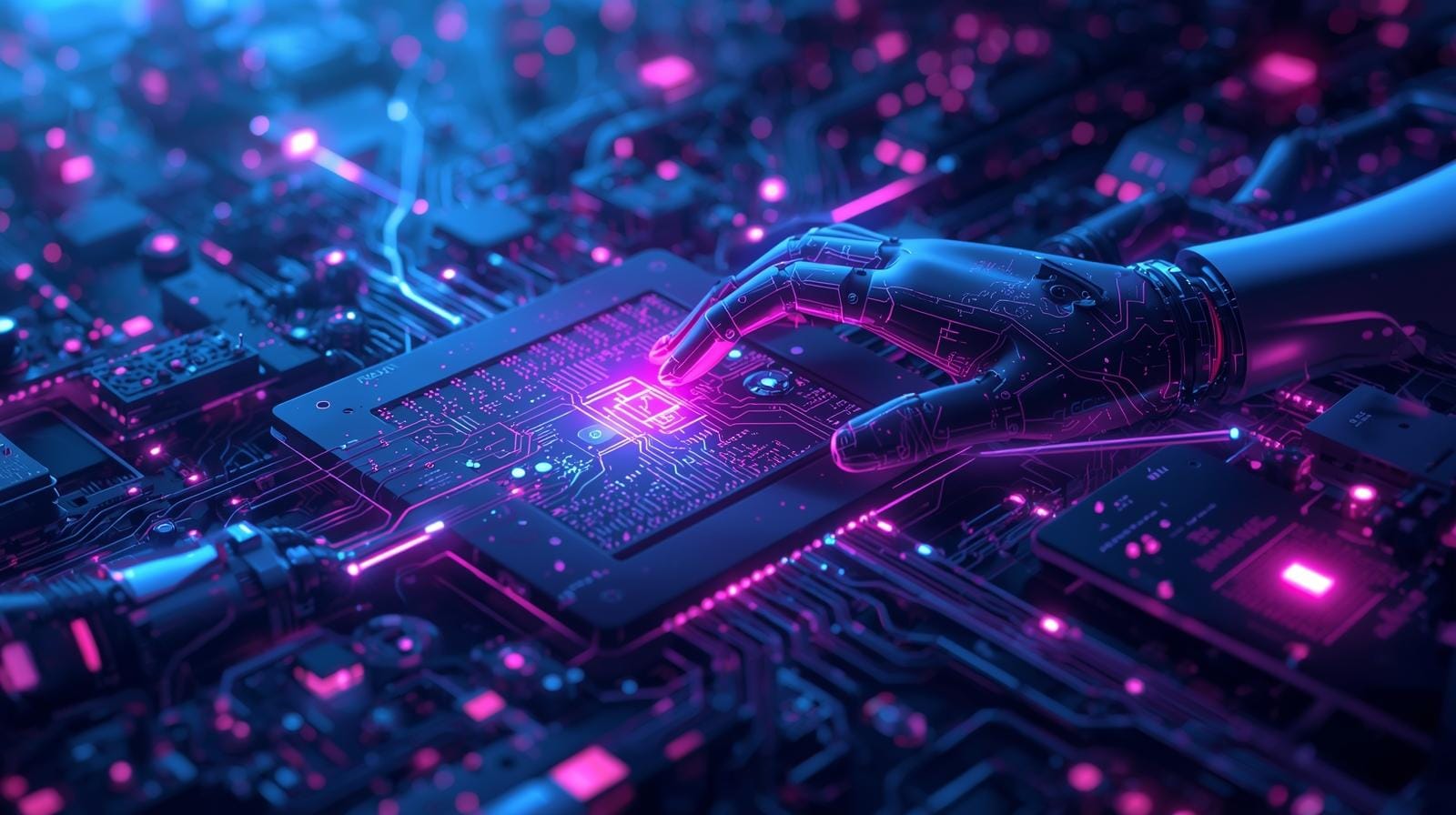
The deep learning revolution isn’t happening in isolation. It’s fuelled by an ecosystem of hardware, software, and data infrastructure working together.
➡️ Neural Network Architectures Transforming AI
Architectures like Transformers, Convolutional Neural Networks (CNNs), and Recurrent Neural Networks (RNNs) have unlocked new capabilities:
- Transformers made large language models possible
- CNNs revolutionized image processing
- RNNs paved the way for early language and time-series models
Each architecture unlocks a different flavour of intelligence.
➡️ The Role of GPUs, TPUs, and Accelerators In Faster Training
If neural networks are the brains, GPUs and TPUs are the muscle. They crunch massive mathematical computations at breakneck speed, turning weeks of training into hours.
Today, even startups can train models that once required supercomputers. That accessibility is one of the main reasons innovation is moving so quickly.
➡️ How Big Data Fuels Advanced Learning Models
Deep learning thrives on data—millions of images, billions of words, and endless streams of real-time signals. Think of it as fuel. More fuel means a longer, more powerful journey. Without big data pipelines, the deep learning boom simply wouldn’t exist.
Real-World Applications Where Deep Learning Is Redefining Industries
Every major industry is now reshaped by models that can see, hear, understand, and predict with human-level intuition.
➡️ AI Vision Systems In Healthcare, Retail, and Security
A radiologist can miss a tumour. A camera analysing thousands of scans? Not so much. Deep learning systems detect abnormalities in X-rays, monitor inventory shelves in real time, and flag suspicious activities in public spaces—all faster than any human.
➡️ Natural Language Processing For Smarter Conversations
Chatbots used to be rigid and frustrating. Now, because of deep learning, they can hold conversations, assist customers, explain products, and even provide emotional support. Everything from virtual assistants to translation apps runs on NLP models trained with deep learning.
➡️ Autonomous Systems and Robotics Powered By Deep Learning
Self-driving cars, warehouse robots, drones—they all rely on deep learning to interpret surroundings, navigate, and make split-second decisions. Robotics may be hardware-heavy, but the “intelligence” that drives it comes from neural networks.
Breakthrough Deep Learning Models Pushing the Limits
The past few years have seen breakthroughs that redefine what machines can do.
➡️ Foundation Models and Multimodal AI
Foundation models are large, versatile AI systems trained on enormous datasets. What sets them apart is their ability to perform dozens of tasks without needing to be retrained from scratch.
Multimodal AI takes it further—models that understand images, text, audio, and video all at once. It’s the closest technology has come to general intelligence.
➡️ Generative AI: From Text To Images To Video
Generative models don’t just analyze—they create. They write, draw, compose music, design products, and simulate environments. Entire industries—from marketing to entertainment—are shifting to generative workflows.
➡️ Reinforcement Learning For Complex Decision-Making
Reinforcement learning mimics how humans learn through rewards and consequences. It’s behind:
- Game-playing champions like AlphaGo
- Autonomous delivery bots
- Industrial robots in factories
It teaches machines to navigate the real world with strategic thinking.
Challenges Slowing The Next Wave Of AI Innovation
➡️ The Compute and Energy Crisis In AI Scaling
Training massive models can cost millions of dollars and consume huge amounts of energy. As models grow, the demand for power becomes a bottleneck for innovation.
➡️ Data Privacy, Bias, and Ethical Concerns
Deep learning models learn from whatever data they’re given. If the data is biased, the output will be biased too. And handling sensitive data—medical, financial, biometric—comes with heavy responsibility.
➡️ The Talent Gap In Advanced AI Engineering
There simply aren’t enough skilled engineers who understand deep learning at scale. As demand surges, the talent shortage widens.
The Future Of Deep Learning and AI Innovation
Where is this wave heading? Faster than most people expect.
➡️ The Shift Toward Smaller, Efficient, and Edge-Ready Models
Instead of building bigger models, the focus is shifting to smarter and smaller ones—models that can run on phones, cars, and edge devices without relying on cloud servers.
➡️ How AGI Research Is Evolving With Deep Learning
Researchers are exploring systems that can reason, adapt, and generalize. While AGI isn’t here yet, deep learning continues to bring us closer to machines that understand the world in flexible, human-like ways.
➡️ Predictions For The Next 5–10 Years of AI Evolution
Expect:
- Personalized AI assistants
- AI-designed products
- Self-optimizing factories
- Hyper-accurate medical AI
- Autonomous everything
Deep learning won’t just support innovation—it will drive it.
FAQs
Is Deep Learning The Same As AI?
No. Deep learning is a subset of AI, but it’s currently the most powerful and widely used technique for modern AI applications.
Why Has Deep Learning Grown So Quickly?
Advancements in hardware, massive datasets, and new neural network architectures accelerated its growth.
Can Deep Learning Work Without Big Data?
It can, but performance drops. Deep learning models thrive on large, diverse datasets.
Is Deep Learning Safe For Sensitive Fields Like Healthcare?
Yes, but only with strict privacy controls, bias checks, and ethical guardrails.
Will Deep Learning Lead To AGI?
Possibly. It’s a major stepping stone, but AGI will likely require new approaches combined with deep learning.